Table of contents British Place Unfair Taxes on Colonists 4 Colonists Protest with Boston Tea Party Congress Appeals to King George III Paul Revere Warns of British Approach 10 First shot of American Revolution Fired 12 British Win Battle of Bunker Hill 14 Congress Approves Declaration of Independence 16 George Washington Heads the Continental Army 18 Continental Army Spends Winter at Valley Forge 20 British Surrender at Yorktown 22 Treaty of Paris Brings End to War 24 Colonies Unite under the US Constitution 26 12 Key Dates 28 Glossary 30 For More Information 31 Index 32 About the Author 32
1 British Place Unfair Taxes on Colonists Since the early 1600s Great Britain had ruled the several colonies along Indian War 1754 1763 the British and the French fought to expand their territory in North America the east coast of North America France controlled large parts of After the French and Indian War North America known as New France This area spanned from ended the British needed money to support their army They decided to tax American colonists to raise Louisiana through the Mississippi Valley and the Great Lakes to Canada During the French and funds One of the first taxes was the Stamp Act It was passed on March 22 1765 It taxed all printed matter This included newspapers pamphlets marriage licenses playing cards and wills British agents stamped the items to prove the tax was paid Many colonists opposed the Stamp Act They complained about the British taxing them without their consent The colonies had no direct representation in the British government In protest many Americans called for This map shows the 13 original American colonies a boycott on British goods A group called 4
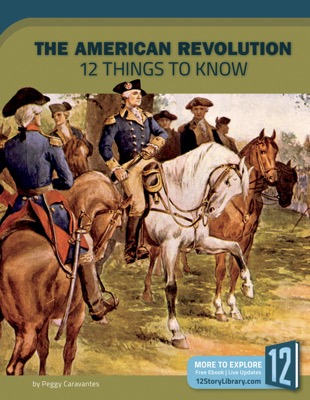
The American Revolution 12 Things To Know
Takes readers on a journey with 12 engaging chapters featuring the war’s critical moments, key players, and more.
About This Book
By: Peggy Caravantes
Illustrated by:
Published by: 12-Story Library provided by Amicus, part of The Creative Company